

The African Continental Free Trade Area is intended to make trade across the continent easier. A central part of that ambition concerns the practical cost of moving goods, not simply the tax charged at the border.
Beyond tariff reductions
In a study released in July 2020, the World Bank estimated that full implementation could increase regional income by about US$450 billion by 2035 and lift 30 million people out of extreme poverty. These were modelled possibilities, not income already earned or a guarantee of future results.
The analysis placed substantial weight on trade facilitation: simpler customs procedures, less paperwork and lower compliance costs. Removing tariffs alone would not deliver the full projected benefit.

Photo: Andrew Moore / Wikimedia Commons / CC BY-SA 2.0. Open original photo and licence record.
What changes for traders?
For business reporting, this creates concrete questions. How long does a consignment take to clear? Which documents must a small exporter obtain? Are transport and compliance costs falling?
Following those questions helps explain whether a continental agreement is changing daily commercial activity. A signed commitment is the starting point; measurable improvements for traders are the stronger test of implementation.
Source: World Bank, 27 July 2020: AfCFTA modelling.
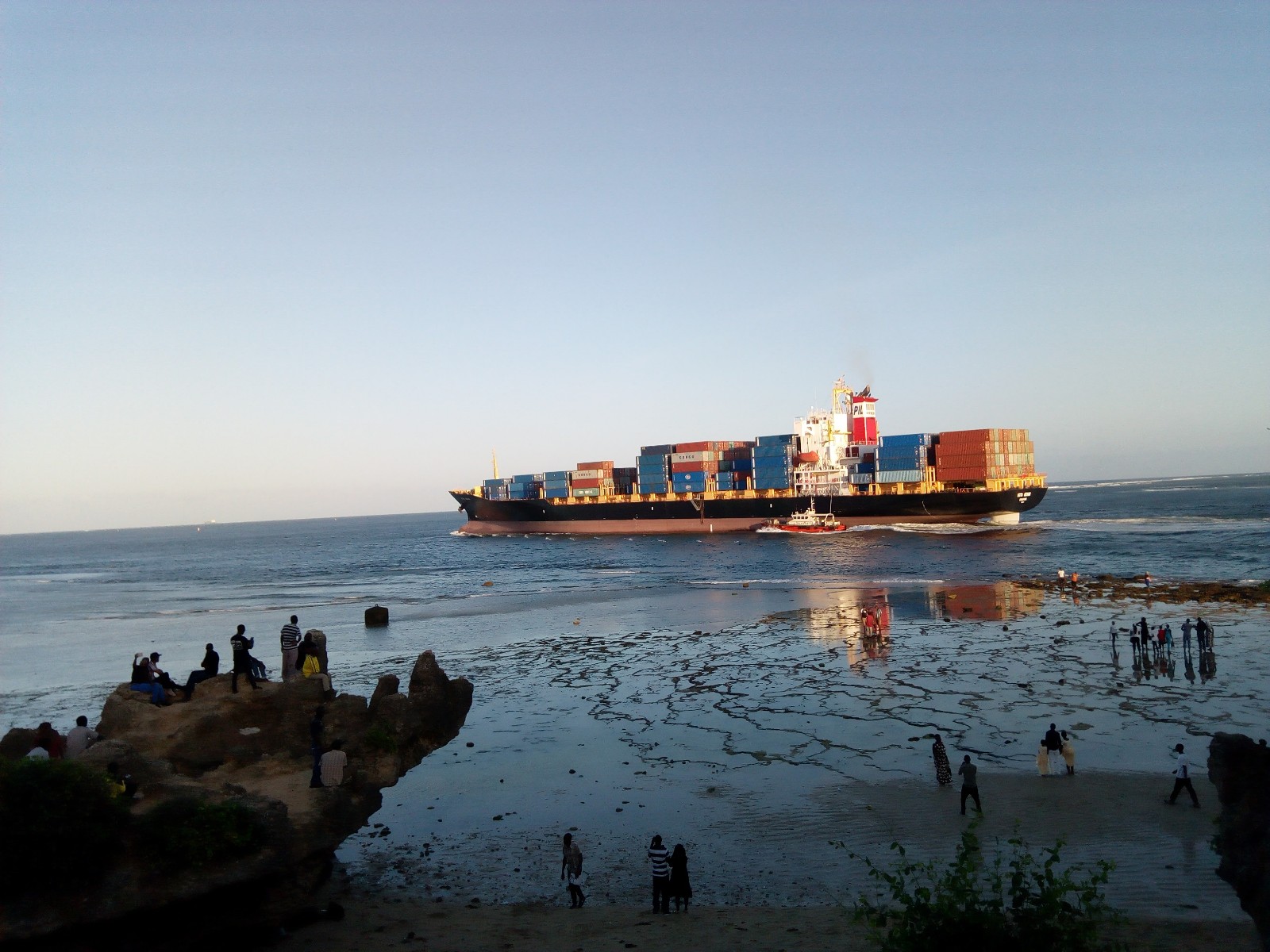
Featured photo credit: A container ship leaving Mombasa port, Kenya. Archive image; the source gives a date range of 2016–2022.
Photo: Ian Kiptoo / Wikimedia Commons / CC BY 4.0. Open original photo and licence record.

