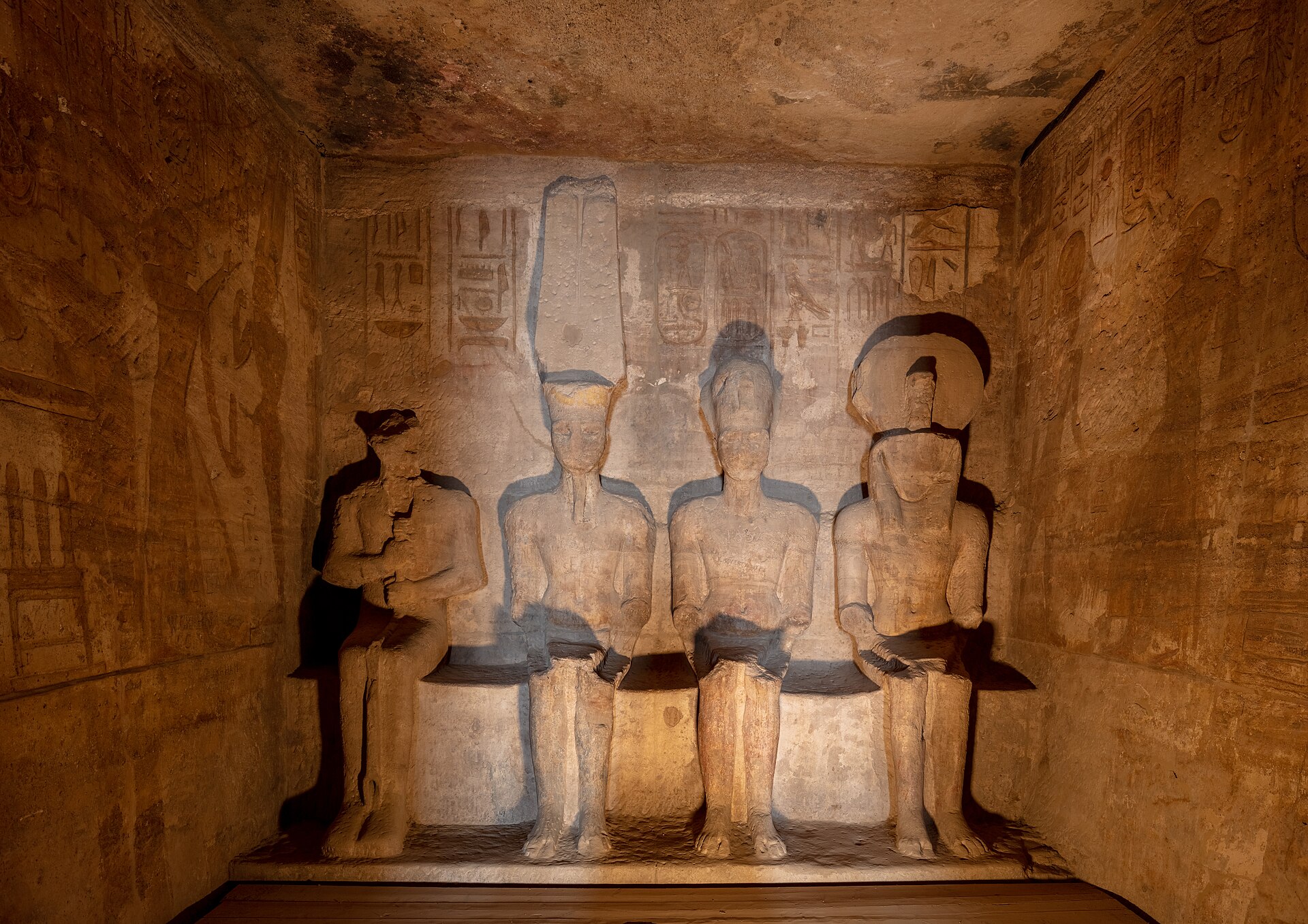
Twice a year, the rising sun reaches deep inside Egypt’s Abu Simbel temple and falls on the face of Ramses II. On 22 October, hundreds of tourists from around the world were there to see it, Africanews reported with the Associated Press.
Some had spent the night in Abu Simbel to make sure they did not miss the moment.
Today is an extraordinary day, everyone is keen, there are people who stayed over the night, foreigners who actually spent the night in Abu Simbel to see this phenomenon,
Yasser Fouad, Egyptian tour guide, speaking to AP
An ancient temple, moved
The temple dates to the 13th century BC and is one of Egypt’s most famous sites. The light reaches the statue on 22 October and 22 February each year. Some archaeologists link the dates to Ramses’ birthday and his coronation, though that is still debated.
What many visitors don’t realise is that the temple is not where it was built. In the 1960s, archaeologists took it apart and rebuilt it on higher ground to save it from the waters of the Aswan Dam. There are competing theories about exactly how the solar alignment worked at the original site.
Ramses II was the third pharaoh of Egypt’s 19th dynasty. More than 3,000 years later, he is still drawing a crowd before dawn.