

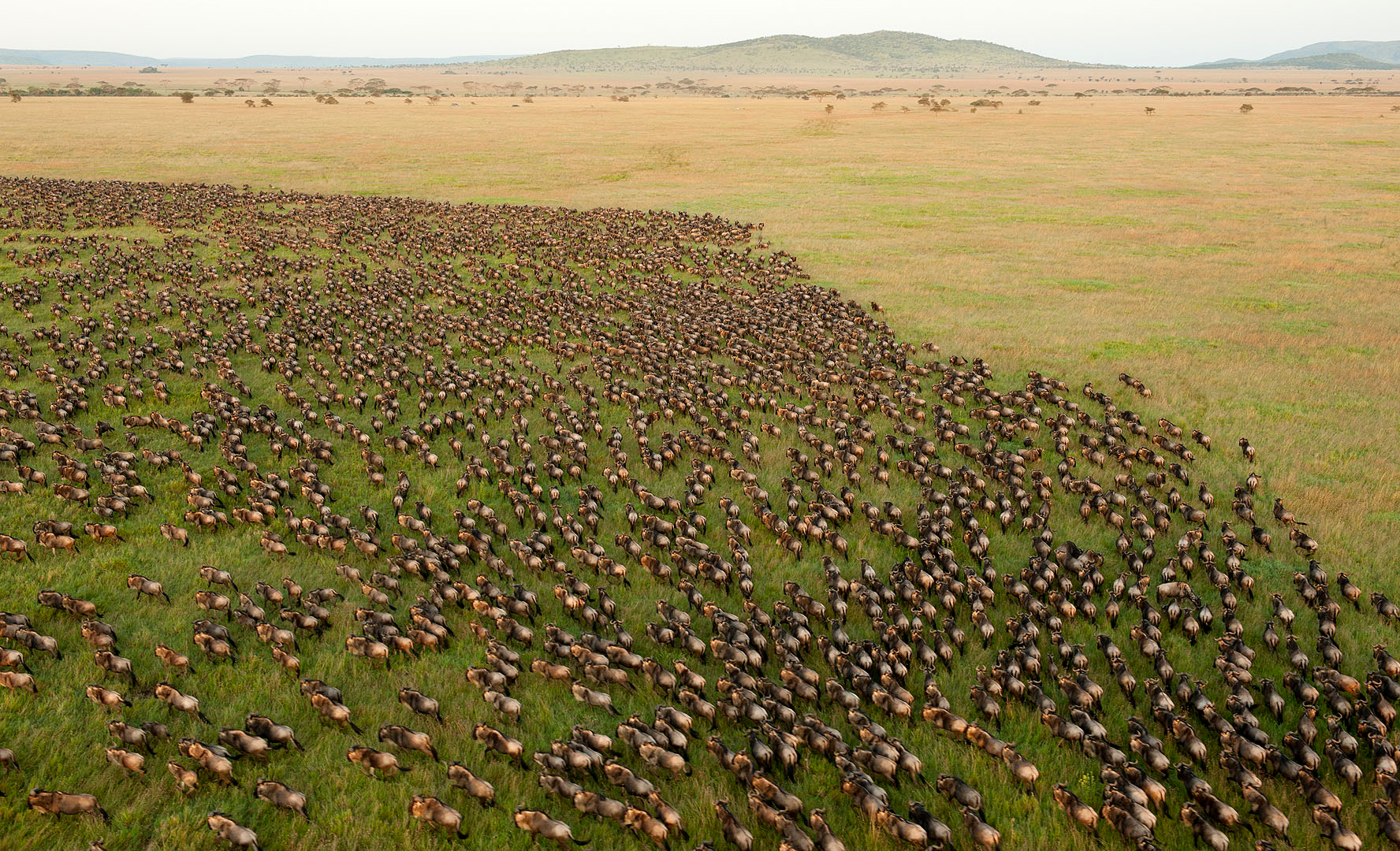
Tanzania’s Serengeti National Park is internationally recognised for its wildlife and migration. Understanding its significance means looking beyond the boundary of a single protected area.
A landscape beyond park boundaries
UNESCO describes the park as part of a larger ecosystem shaped by the annual movement of wildlife. That landscape connects with neighbouring conservation areas and extends towards Kenya’s Maasai Mara.
The connection matters because animal movement and access to water do not stop at administrative borders. Protecting the park alone cannot guarantee protection of the entire ecological system.

Photo: Richard Mortel / Wikimedia Commons / CC BY 2.0. Original photo and licence record.
What travellers should understand
For travellers, this is a reason to approach the Serengeti as a living landscape rather than a fixed wildlife display. An itinerary cannot guarantee where animals will be on a particular day, and a dramatic photograph does not establish what every visitor will see.
Good travel reporting can combine the appeal of a destination with an explanation of its conservation needs. Before booking, visitors should verify current park information, operator credentials and transport arrangements. Responsible coverage should avoid presenting wildlife sightings as a guaranteed product or ignoring the wider landscape on which they depend.
Source: UNESCO World Heritage Centre: Serengeti National Park.
Featured photo credit: Wildebeest migration in Serengeti National Park, Tanzania, May 2013. Archive image; not a prediction of wildlife locations in 2027.
Photo: Daniel Rosengren / Wikimedia Commons / CC BY 4.0. Open original photo and licence record.

